
The Hidden Building Movement Engineering Gap for Glazing Systems
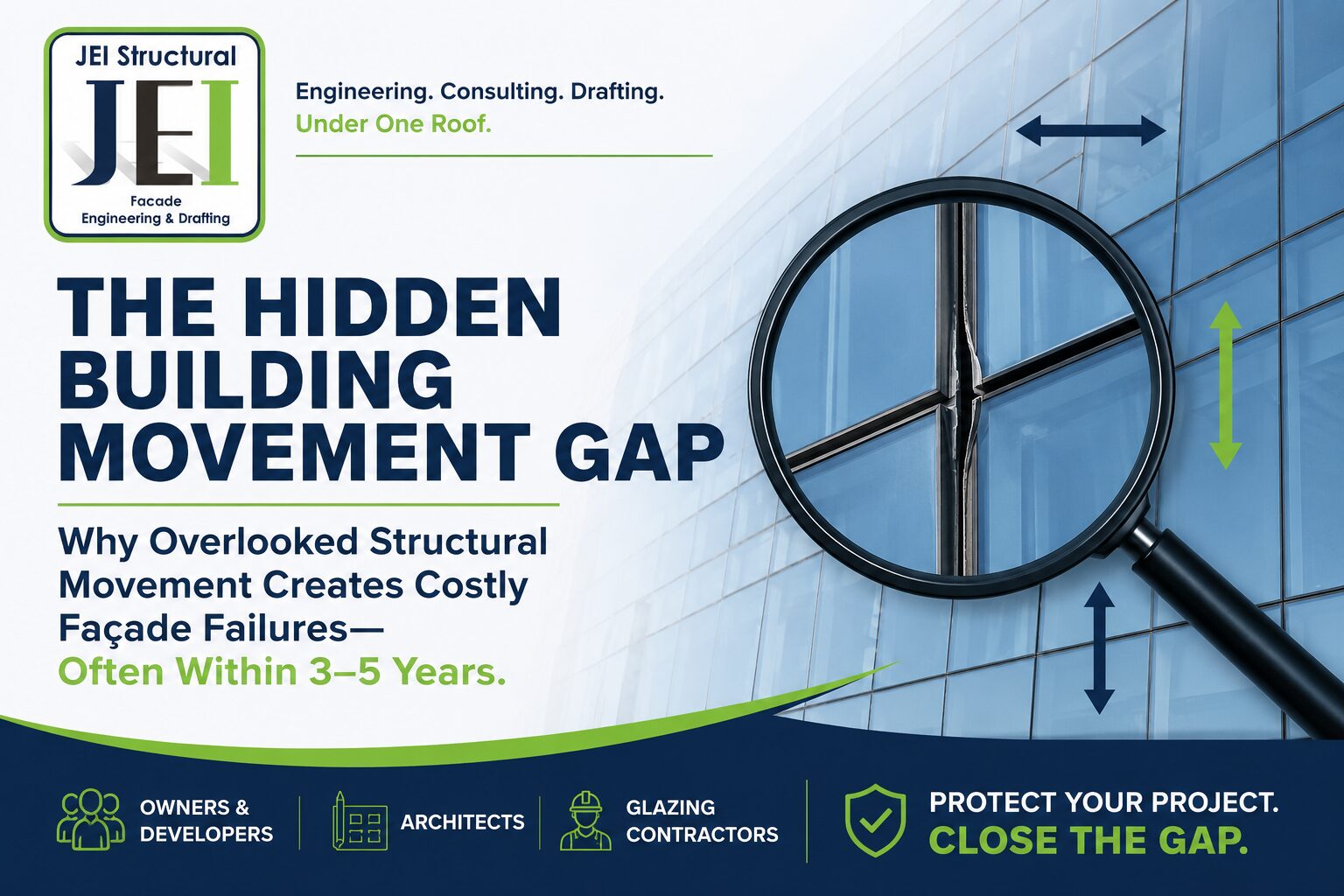
The Hidden Building Movement Engineering Gap for Glazing Systems
The Hidden Building Movement Engineering Gap for Glazing Systems
Why Owners, Architects, and Glazing Contractors Continue to Experience Water Leaks, Broken Glass, and Costly Façade Repairs Years After Construction
By Stewart Jeske, P.E.
Founder, JEI Structural Façade Engineering, Consulting & Drafting
Most commercial buildings are designed to last decades.
Yet many curtain walls and storefront systems begin showing signs of failure within just three to five years.
The symptoms often appear slowly:
- Water stains around window heads
- Interior leaks after heavy rain
- Cracked glass
- Torn gaskets
- Compressed or separated sealants
- Doors that no longer operate correctly
- Curtain wall components that begin binding or disengaging
These problems are frequently blamed on workmanship, sealants, maintenance, or product quality.
However, in many cases, the root cause began years earlier—during design.
Buildings Move. Every Day.
One of the most misunderstood aspects of commercial building design is that buildings are not static.
Steel beams deflect.
Concrete creeps.
Floors move under live loads.
Columns shorten.
Structures expand and contract with temperature.
Wind loads create lateral movement.
Yet glazing systems are expected to remain:
- Watertight
- Structurally sound
- Architecturally aligned
- Operational
- Attractive
Those two realities only coexist when structural building movement has been properly considered throughout the design process.
Unfortunately, it often isn’t.
The Building Movement Gap
Structural building movement frequently falls into the gaps between project participants.
Each discipline assumes someone else has addressed it.
The result is what we call The Building Movement Gap.
Critical movement information may never be fully communicated between:
- Owner
- Architect
- Structural Engineer of Record
- Manufacturer
- General Contractor
- Glazing Contractor
- Delegated Design Engineer
Everyone performs their individual responsibilities.
Yet no one verifies that the complete movement story has been coordinated.
The consequences may not become visible until years after occupancy.
Building Envelope Engineering, Consulting & Drafting
Why Owners Should Care
Owners typically inherit the consequences—not the design decisions.
When structural building movement isn’t properly accommodated, building envelope failures can begin years before the expected service life of the curtain wall.
Water intrusion often develops slowly.
Seal failures may appear insignificant.
Hairline glass cracks may seem isolated.
Unfortunately, these symptoms are frequently treated individually rather than traced back to the original structural movement assumptions.
The result can include:
- Premature curtain wall deterioration
- Expensive investigative studies
- Occupant complaints
- Warranty disputes
- Water damage
- Mold concerns
- Reduced property value
- Unexpected capital expenditures
Many owners never realize the underlying cause was a movement coordination issue during design.
Why Architects Should Care
Architects invest tremendous effort creating beautiful building envelopes.
Yet delegated design often occurs after contract documents are complete.
If structural movement criteria are incomplete, unclear, or never communicated, the delegated design team is forced to make assumptions.
Those assumptions may differ from the Architect’s design intent.
The result can be:
- RFIs
- Redesign
- Coordination conflicts
- Increased liability
- Performance issues years later
Early coordination dramatically reduces these risks.
Why Glazing Contractors Should Care
Few trades inherit more hidden responsibility than glazing contractors.
Delegated design often transfers engineering responsibility after bid day.
Unfortunately, the information necessary to perform that engineering may not transfer with it.
Glazing contractors can unknowingly assume responsibility for:
- Live load deflection
- Differential movement
- Thermal movement
- Structural compatibility
- Manufacturer limitations
- Connection performance
By the time these issues are discovered, fabrication schedules and budgets are already committed.
Prevent Problems Before Construction Begins
The most effective solution is early collaboration.
Movement should be discussed during design—not after fabrication begins.
JEI regularly assists project teams through:
- Building Envelope Consulting
- Design Assist
- Independent Third-Party Structural Reviews
- Delegated Design Engineering
- Constructability Reviews
- Engineering & Drafting Under One Roof
Early review helps identify movement concerns before they become expensive field problems.
Free Resources for Your Project Team
JEI has developed several complimentary technical resources to help architects, owners, engineers, and glazing contractors reduce building envelope risk.
Third-Party Façade Structural Engineering Review Specification
Glazing System Structural Movement Submittal Matrix Specification
Architect’s Glazing Design Checklist
Glazing Project Manager Reference Notes
Short Reel Video Series | The Delegated Design Gap Explained
Stewart Jeske, P.E. has developed a series of educational videos explaining the engineering principles behind structural building movement, delegated design, and building envelope coordination.
Watch the complete playlist:
https://www.youtube.com/playlist?list=PLdzXpR57TVwg81I_zW55MfjiH0HhQHA-W
Final Thoughts
Commercial building envelopes are expected to perform for decades.
When structural building movement is overlooked—or addressed too late—problems may not appear until years after occupancy. By then, the original cause is often hidden behind symptoms such as leaking sealants, cracked glass, or recurring maintenance issues.
Successful projects don’t happen because buildings don’t move.
They happen because project teams anticipate that movement, communicate it clearly, and engineer glazing systems that accommodate it from the very beginning.
JEI Structural is a nationwide specialty glass and facade consulting, engineering and drafting firm specializing in glass and glazing engineering, curtain wall and storefront systems, structural glass, glass railings, architectural metal systems including louvers, sunshades, fins and canopies, cladding and panel systems, delegated design, building envelope consulting, shop drawings, constructability reviews and third-party facade reviews for glazing contractors, general contractors, architects, owners and manufacturers.
Specialty Glass and Facade Consulting, Engineering & Drafting
- Glass & Glazing Systems
- Architectural Metal & Specialty Facade Systems
- Cladding & Panel Systems
Categories
- Aluminum Composite Panels
- Architects
- Architectural Engineering Degree Job
- Architectural Engineering Job
- Bid Lists
- Building Envelope Contractor
- Building Envelope Shop Drawings
- Building Envelope Shops
- Building Facade Design Engineer
- Civil Engineering Degree Career Job
- Codes
- Commercial Building Skylight Design
- Curtain Wall Design Company
- Delegated Design Engineering
- Delegated Design Glazing & Curtain Wall
- Delegated Design Shop Drawings
- details
- enclosure engineering
- Engineering Tips – Glass & Glazing
- Exhibit Viewing Glass
- Facade Consulting
- Facade Engineering
- Facade Shop Drawing
- Facade Shop Drawings
- FM Approvals
- Glass Railing
- Glass Shop Drawing
- Glass Submittal
- Glazing Contractor
- Glazing Detail
- Glazing Product Approval Engineering
- Glazing Submittal
- Government Bids
- ICC Evaluation Service — ICC-ES
- Industry News
- laminated animal viewing walls
- shops
- Specialty Glass Engineering
- Specialty Structural Glass
- Storefront
- Structural Glass
- Structural Glass Wall Design Engineers
- Testimonials
- Uncategorized
- Window Blast
- Window Thermal Analysis