
Zoo Enclosure Glass Design Engineering Design
Behind the Glass: Engineering for Animal Impact, Speed & Projectiles
When visitors lean in close to watch a gorilla, tiger, or shark, they see only the beauty of the animal and the clarity of the view. What they don’t see are the calculations, safety factors, and engineering decisions that make those moments possible — and safe.
At JEI Structural, we specialize in glass and glazing engineering for zoos and aquariums, where the line between safety and spectacle is measured in fractions of an inch. Designing these systems is about more than laminated glass and sealants; it’s about anticipating what happens when 600 pounds of muscle, claws, or even a thrown rock collide with a transparent barrier.
The Challenge: Animals Don’t Follow Codes
Traditional building codes (ASTM, GANA, international glazing standards) establish requirements for wind load, seismic load, and human safety. But zoos and aquariums introduce a different set of conditions:
-
Dynamic Impacts – A gorilla charging at 20 mph exerts forces far beyond a static load.
-
Foreign Objects – Animals often pick up and throw rocks, sticks, or enrichment toys, turning them into projectiles.
-
Behavioral Uncertainty – Unlike a predictable wind load, animal behavior can be sudden, repetitive, and highly localized on one area of the glass.
-
Environmental Factors – Outdoor exhibits expose glass to temperature swings, while aquariums add hydrostatic and “sloshing” pressures from water.
These factors mean engineers must blend structural science with animal science, relying on zookeepers’ insights about animal size, weight, speed, and behavior patterns.
The Engineering Response
Designing glass enclosures requires layers of defense:
-
Safety Factors
-
Instead of applying the same safety factor as a commercial façade, animal enclosures often require higher multipliers to account for unpredictable impact.
-
Engineers weigh options such as SF4 (6,000 psi) vs. SF10 (2,400 psi), balancing strength and practicality.
-
-
Glass Makeup
-
For large predators, a typical system may include three plies of ½” fully tempered glass with interlayers, reaching total thicknesses of 1½”–2”.
-
In high-wear areas, a sacrificial wear ply can be added, designed for easy replacement if scratched or damaged.
-
-
Acrylic vs. Glass
-
Acrylic allows for larger spans and curved panels but scratches easily and requires stand-off distances to prevent damage.
-
Glass offers superior scratch resistance and surface hardness but is limited by manufacturing size.
-
-
Structural Support
-
Edge support (4-sided vs. 2-sided) dramatically affects how panels distribute loads.
-
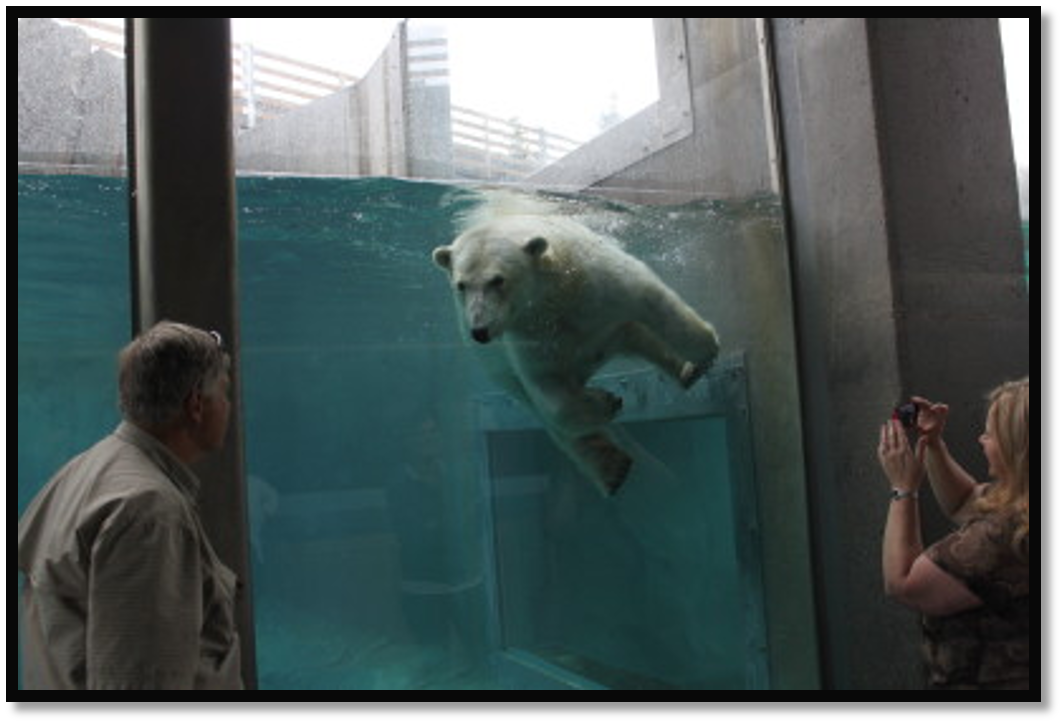
Submerged panels require stainless steel framing and sealants designed for hydrostatic loads.
-
Real-World Examples
-
Predator Habitats – Multi-ply laminated glass resists both direct impact and projectiles from large carnivores.
-
Aquarium Viewing Panels – Glass designed for hydrostatic and seismic hydrodynamic loads ensures underwater safety.
-
Primate Exhibits – Acrylic vs. glass analysis helps balance clarity, durability, and the risk of scratching from animal interaction.
The Sweet Spot: Safety Meets Experience
The art of zoo and aquarium glazing design lies in finding the sweet spot between over-engineering (which inflates cost and installation challenges) and under-engineering (which risks safety and reputation).
At JEI Structural, we partner with architects, exhibit designers, contractors, and zookeepers to create glazing systems that:
-
Protect people and animals
-
Preserve clear sightlines and visitor experiences
-
Perform reliably in extreme and unpredictable conditions
Final Thought
When you stand behind a sheet of glass watching a gorilla pound the enclosure or a sea lion slam into an aquarium window, remember: that view exists because engineers planned for the “what ifs.”
Behind the glass is not just an animal. It’s engineering at its finest.
Submit construction documents for FREE QUOTE. Send email to Info@JEIstructural.com